The understanding of borderline personality disorder (BPD) continues to evolve. As do we of ourselves and each other.
A psychiatrist helped me name my demon in 1997.
Spoiler alert: it’s me.
When I was 17-ish years old, a psychiatrist recognized my symptoms of mental illness as more than mere adolescent bullshit, and affixed the label that stuck: Borderline Personality Disorder (BPD). At the time, with a side of cyclothymia and a cocaine problem.
I learned there was a name for people like me.
BPD Diagnostic Criteria
A pervasive pattern of instability of interpersonal relationships, self image and affects, and marked impulsivity beginning by early adulthood and present in a variety of contexts, as indicated by five (or more) of the following:
1. Fear of abandonment
2. Unstable or changing relationships
3. Unstable self-image; struggles with identity or sense of self
4. Impulsive or self-damaging behaviors (e.g., excessive spending, unsafe sex, substance abuse, reckless driving, binge eating).
5. Suicidal behavior or self-injury
6. Varied or random mood swings
7. Constant feelings of worthlessness or sadness
8. Problems with anger, including frequent loss of temper or physical fights
9. Stress-related paranoia or loss of contact with reality
*Diagnostic and Statistical Manual of Mental Disorders, published by the American Psychiatric Association
Regulating emotion may seem like an easy thing, “Calm down, sir, this is a Wendy’s,” but it’s related to parts of the brain that develop for better or worse depending on … all the things. Genetics, environment, just life doing the whole life thing. We all develop different personalities for a variety of reasons.
I feel too goddamn much. It makes me seem obsessive and uncontrolled; impulsive. I say it’s all part of my charm. I say that with a LOT of hindsight.
In 1997, when I was mentally ill, “I Hate You, Don’t Leave Me,” was the only thing close to a self-help book I could find in my local bookstore.
I read all about myself in the case studies and examples,
The authors were telling me what I already knew! I saw myself in the scenarios, but BPD was still rarely diagnosed let alone understood well enough to treat. In fact, Marsha Linehan was just developing the gold standard treatment for highly suicidal people with BPD as I spun off and out.
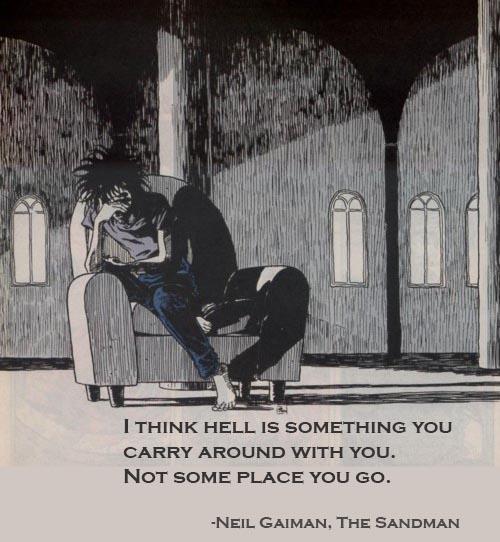
I sometimes seem obsessive and uncontrolled; impulsive. I say it’s all part of my charm. I say that with a LOT of hindsight and my entire tongue in my cheek.
I desperately wanted to quiet self-destructive thinking, so I tried psychotropic pills to regulate my moods after receiving the diagnoses in 1997.
Two years later, I changed states literally and figuratively, and remained violently lost in an emotional vortex where drugs held the only answers I could grasp. I was stuck seeking silence.
The reason I kept going despite every suicidal cell in my overwhelmed body was to be the mom that I always needed and not a Momster.
The Dialectical Behavioral Therapy Marsh Linehan developed didn’t exist when I needed it.
I turn 47 in 2025, god swilling and the creek don’t rise. (not a typo)
I’ve been happily married to my best friend and partner, Russell, since 2009, and our daughter and son have so far successfully entered their teens.
The lessons I learned over the last three decades are tattoos across my skin and scar tissue around my heart. I’ve made weapons out of my imperfections, and I use them to protect and prepare my children for a world that can choose to be cruel or be kind. Also, turns out dialectical behavior therapy (DBT) does a great job defining for other psych professionals what people with BPD go through.
But describing how this feels is incredibly tough. People I’ve known my whole life surprise me when they realize things I assumed they’d always known, such as how it feels to have a panic attack and scream so hard you piss yourself. I’m just saying, I’ve heard it can happen to mothers of a certain age.
I’m working on a memoir as part of my master’s in fine arts, which makes me a graduate student of myself.
Feel free to follow along.