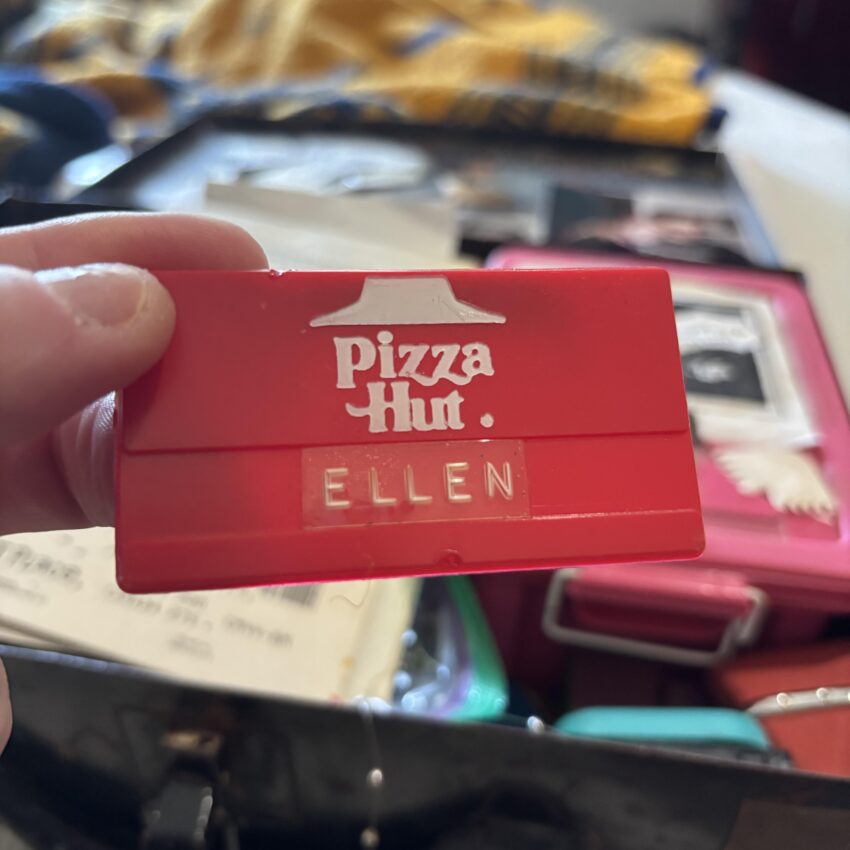
I worked a Pizza Hut when I was 16 years old.
“Pizza slut,” my younger brother joked about my first “real” (taxpaying) job.
This was in the days of brightly colored and unique fast-food chain branding. The mid-1990s, when some Pizza Huts boasted signature red roofs that looked like a flat iron pressing the building’s awnings.
But not the place I worked. I didn’t work in one of the big restaurants; I worked in a tiny kitchen operation that took orders for delivery and pick up only.
“Hello, my name is Ellen. How may I take your order?” or whatever skewed version of what I was supposed to say is what came out when I answered one of my first calls.
Frantically searching for the buttons on the keyboard for the pizza she wants, I get flustered. I need a second to figure out this new machine.
“It’s my first day,” I offer, apologetically.
The customer repeats herself as a man’s voice complains in the background.
“Does she speak English?” I could hear him ask. “Make sure they repeat the order.”
I’m not sure at what point my manager had to step in, but by that point I was so upset that I had to step into the back area.
“Mix the tomato sauce” I’m told as I take ownership of the long metal ladle shoved deep into an aluminum pot. The thick sauce bubbles like molten lava in Pizza Hut red. I cry as I stir.
Even in the moment, as my negative self-talk tried to quiet the stranger’s, I sensed the poetry in my emotional turmoil.
When I got home, I stripped off the red, cotton blend shirt that reeked of pizza grease and sweat. I unpinned my red name tag, sat down on my bed and wrote a poem about crying in the pizza sauce.