Validation is central to dialectical behavior therapy for borderline personality disorder
My mother went back to school to earn a degree as a registered nurse. She was a licensed practical nurse and wanted more education and better opportunities.
I was in elementary school but already intrigued by people’s motivations. When Mom took whatever basic psychology nurses learned in the early 1990s, I read the textbook.
One particular passage struck me so much that it stuck with me until today, July 27, 2025.
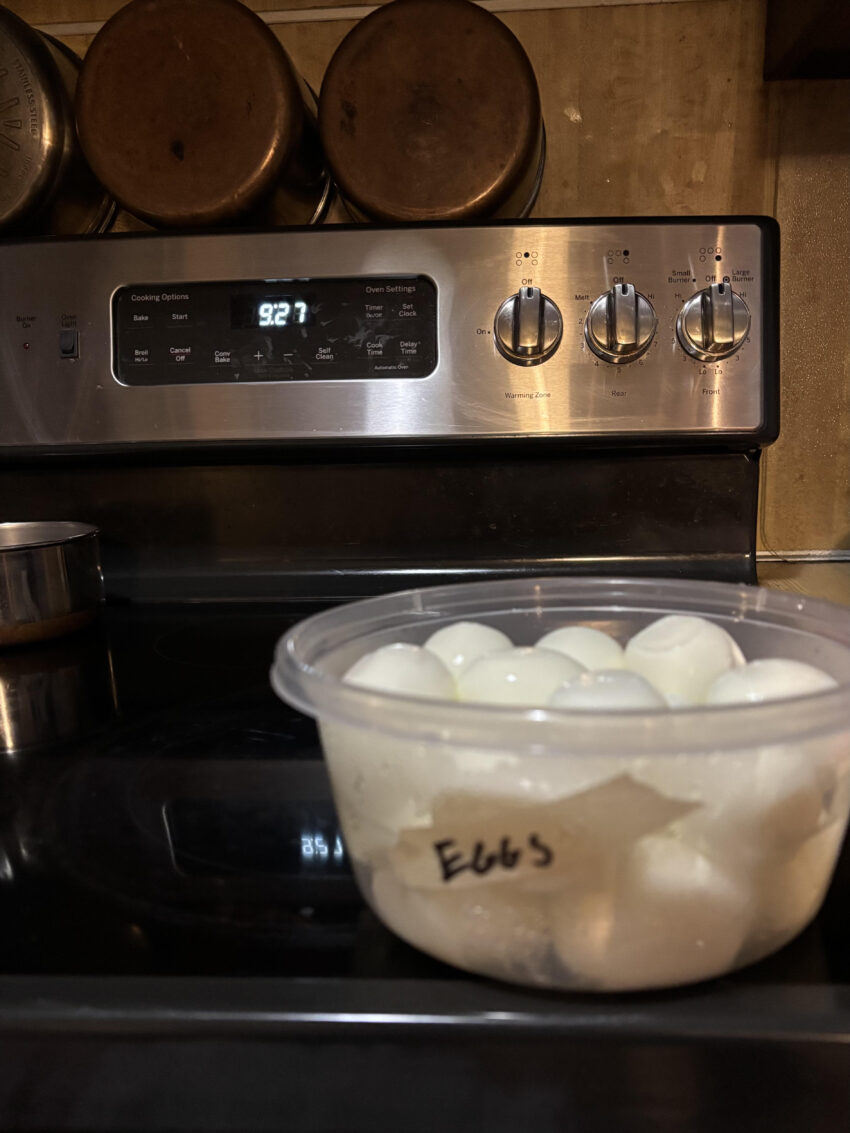
A patient in a case study believed he was an Easter egg. The textbook instructed the nurse to ask more questions and uncover why the man felt this way.
All these years later, I realize that is a huge part of what was missing from my childhood: validation.
My father expected my mother to take the lead in raising me and my younger siblings, but she was the baby of her family. She had no idea what to expect and then she got me.
So sensitive from a young age that I remember my dad making fun of me (I’m not sure how he was teasing me, but I’m sure he wasn’t malicious), and anger pulsed from my heart to my hands. I threw a hard plastic block – one of the 26 letters of the alphabet – and hit his hand near the knuckle. He has said it never fully healed.
Same, Dad.
Mom once told me that, despite having been a 26-year-old who had been married for a year and a half, her mother was disappointed when Mom got pregnant with me. When Mom told me the story, I felt both her sadness and confusion. If I were to guess, my maternal grandmother lived with mental illness.
Sensitive and needy. I’m not sure where you want to draw lines about a child’s neediness, but I regularly woke in the night begging Mom, “rock, rock” and “Gah-gah.” These were the first words I spoke, asking to be held, rocked and snuggled in my soft yellow blanket that I called Gah-gah. I vaguely remember holding the corner of the fabric so that its triangle overhang looked like a snake’s head.
“Gah -gah” is what I heard in my head when I held my blanket that way. I amused myself. I remember laughing at Gah-gah.
Anyway, I thought the dude who thought he was an egg was fascinating. Likewise, the idea that telling him, “No, sir, you are not an Easter or any other kind of egg,” the answer was more questions.
Asking more questions meant wanting more information, which mean caring. Nurses care for patients, but never in a long-term, unconditional way. The way only a mother could love.
But I didn’t feel loved. I didn’t feel understood. I was shut down, corrected and proved wrong like learning was a game I was losing.
My parents criticized me for not having “common sense,” but what the fuck does that mean? No one is born knowing much of anything.
We start out blinded by light and gasping for air as we enter the world. We must be fed and led from there. We need guidance as we grow.
Children need to know they are loved beyond their feeding and sheltering.
If we feel like we are an Easter egg and we are frightened or appalled, we need someone to tell us it’s OK to be scared of the unknown. We need to learn through encouragement, validation and empowerment.
This is something I applied to my kids as they aged into middle school: It’s OK to try and it’s OK to fail and, if you feel like you’re not sure who you are or where you belong, I will be there, asking questions.