Attending the Parsippany Presbyterian Church was my family’s Sunday ritual and where I first formed a relationship with a power greater than myself. My parents took me, my younger brother and sister to this early 19th Century, Gothic Revival, Flemish-bond landmark in New Jersey every Sunday in the 1990s, but I know now that my Dad did it not because he had a deeply held faith, but because going to church was a tradition. I’m not sure my mother believed in anything.
This was a stable congregation. The same pastor who baptized me oversaw my graduation from confirmation classes as I entered adulthood. My status changed and instead of being ushered off to Sunday school, I sat in the nave, heard the weekly sermon, and participated fully in the service.
I paid attention to the words of the hymns and took comfort in the repetition of The Lord’s Prayer and the structure of the service. I sat among my fellow brothers and sisters in Christ and admired the wooden benches and pews in the light streaming through stained glass windows.
The church cemetery held the bones of 18th Century worshipers, and when we drove away from this historic place, I moved forward with faith in humanity and hope for community. One might say I was filled with a sort of “Holy Spirit.”
That part of me never changed even as I learned about different religions, cultures and perspectives. Our church congregation had one Black family, and diversity in my elementary school included an Indian boy named Sanjay and my fellow Girl Scout troop member Nancy, who made a point that she was Taiwanese, not Chinese.
I grew up believing Hanukah was the Jewish high holy time like Christmas is for Christians celebrating the birth of their savior. I also grew up without questioning the idea that a prophet born in the Middle East would look like a European settler.
I wanted my children to learn about religious thought outside the guardrails of a single theological doctrine. I wanted to raise children who believed in community and practiced peace and forgiveness beyond Bible study.
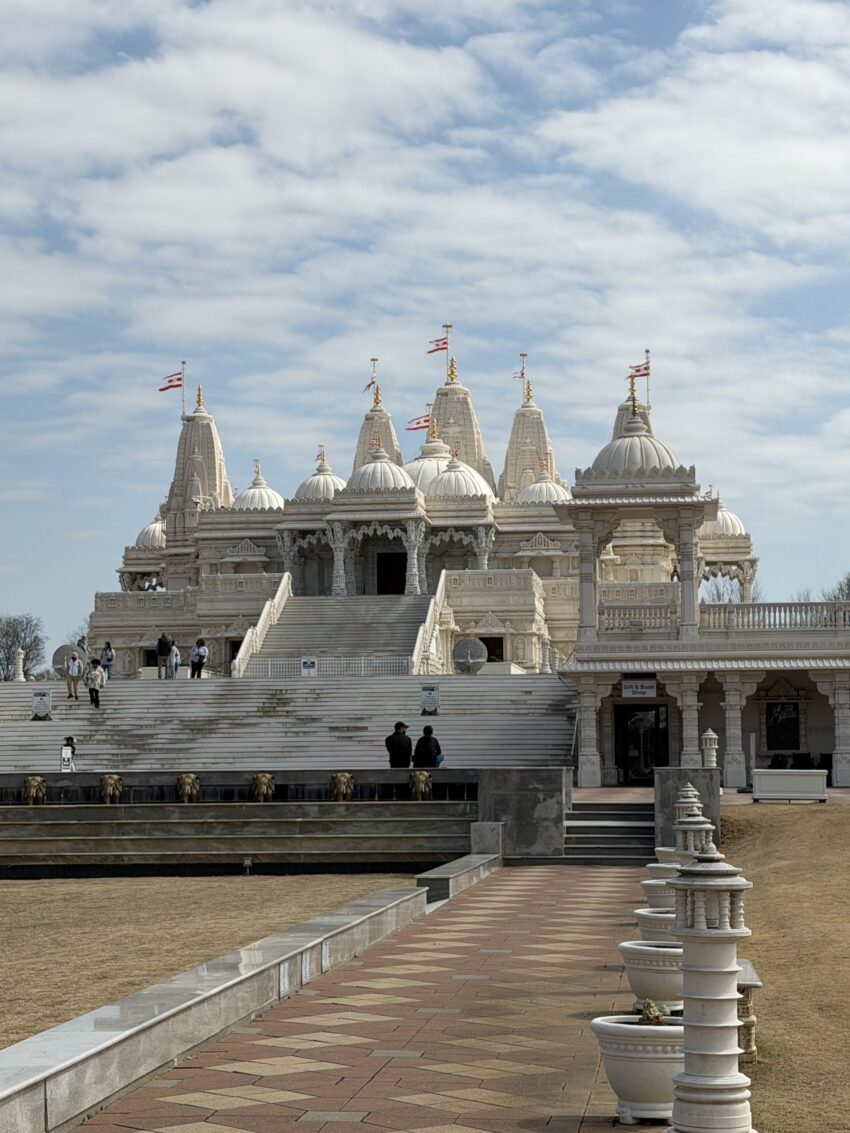
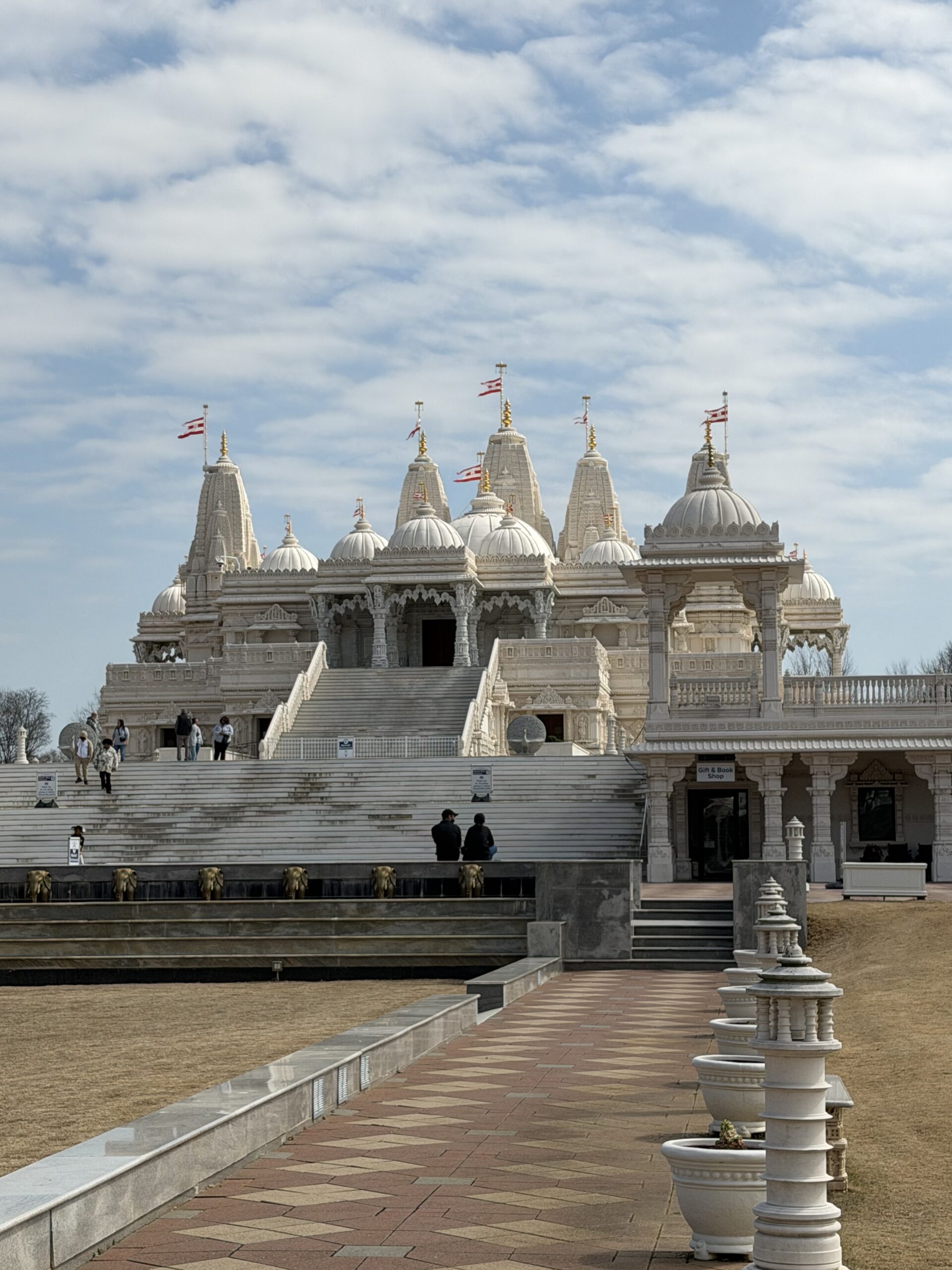
So, in March 2026, I signed up the whole family for my daughter’s class field trip to learn something about Hinduism by visiting one of only five traditional stone temples in the United States. The BAPS Shri Swaminarayan Mandir in Atlanta is like a monumental Lego set made of more than 34,000 hand-carved pieces of Turkish Limestone, Italian marble and pink Indian sandstone that was shipped to Atlanta from India so that the foundation would have home in its essence.
In addition to marveling at the mandir’s architecture, priests who lead the tour invited all of us to participate in Abhishek, a special Hindu ritual that, when performed with devotion and faith, fulfills one’s personal prayers and inner wishes.
I likened the act of pouring water over a statue – without touching it – to throwing a penny in a well, blowing out a birthday candle or kissing a cross.
“You get what you pray for if you’re pure of heart,” I joked as my 15-year-old daughter and I stood in line.
I asked what Meredith wanted.
“To become less of a judgmental person,” she told me, expressing her desire to stay open-minded and accepting of others.
My wish came true.